
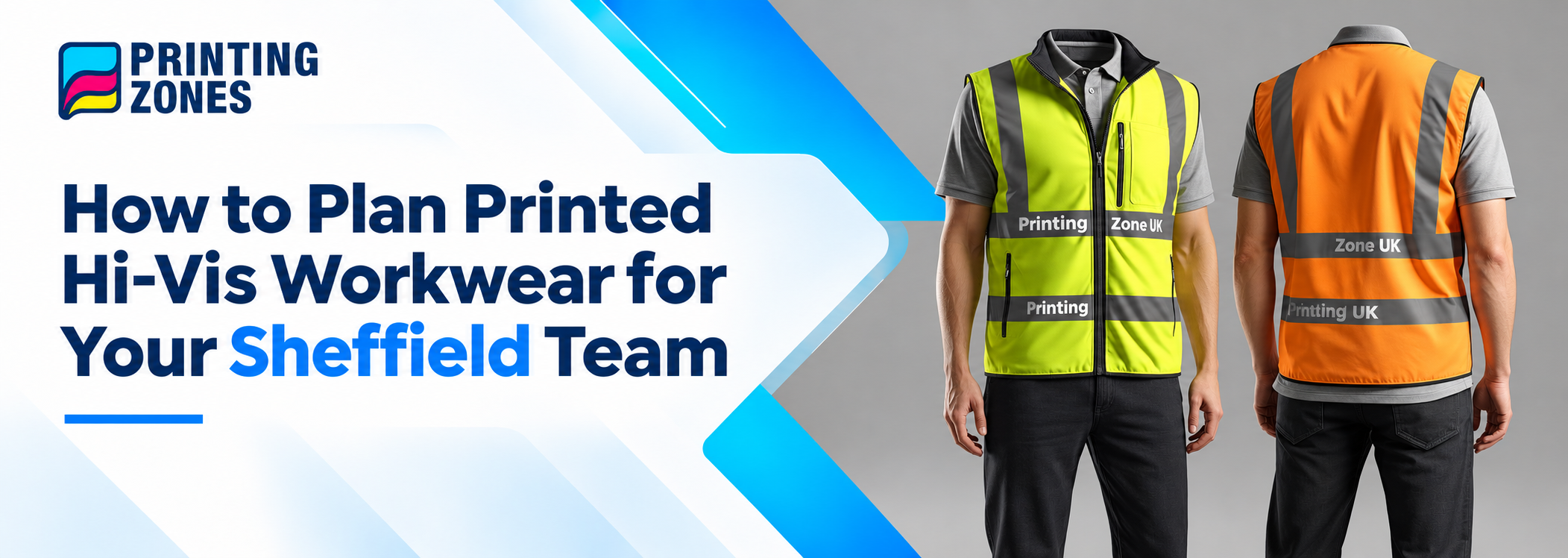
A company logo can help a customer recognise your engineer at the door. At a busy Sheffield event, a visitor might be looking for the word Steward. Both teams can wear branded hi-vis, but the print has a different job in each case.
Before sending artwork to your printer, decide who needs to recognise your team, what they need to read and how the garments will be used day to day.
Start With What People Need to Recognise
Use a company name to distinguish crews
If your team works alongside other contractors on a Sheffield refurbishment, make your company name easy to identify. A logo can work on its own when the name is already part of the design. If your logo is mainly a symbol, consider including the company name in plain lettering.
Use a role label when people need help
At a conference or community event, visitors may need to find a steward, while suppliers need to speak to the setup crew. Give each group a short label people will understand. Event Crew is clearer to a visitor than an internal abbreviation.
Keep the design flexible for staff who rotate
If staff at a Sheffield warehouse move between goods-in and dispatch, a single company design makes it easier to share spare garments. Reserve department or supervisor labels for roles that people regularly need to identify.
Decide Where the Print Should Go
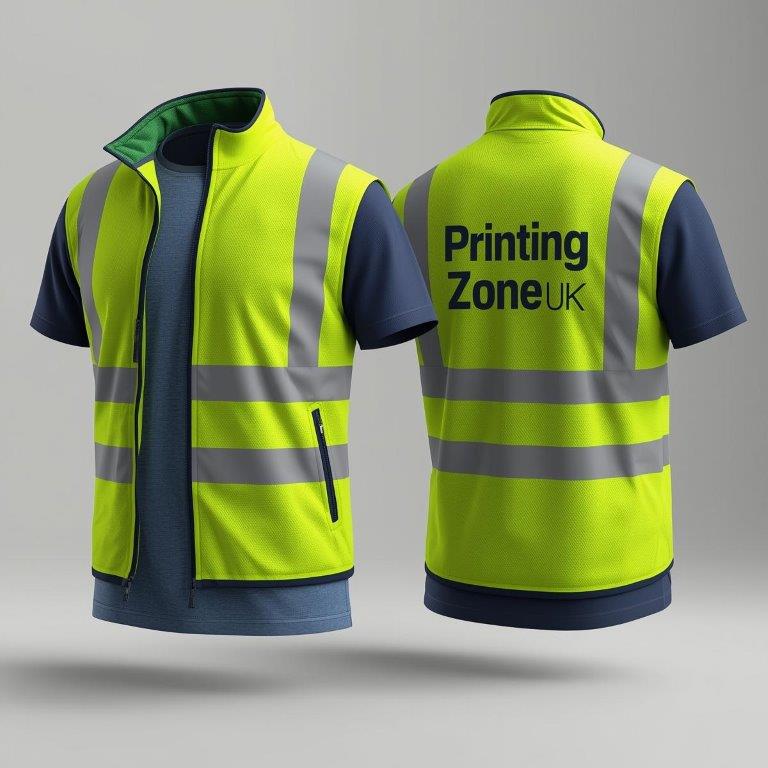
A chest logo suits face-to-face interactions, such as a trade team arriving at a customer’s premises. A back print gives a short company name or role more space and can help someone recognise a team member from behind.
Think about what staff wear or carry over the garment. A jacket worn open might cover one side of a chest print, while a backpack can hide a back label. Before settling on a position, check it against how the team actually dresses for work. If the workplace or venue has garment or branding requirements, include those in your brief.
Check the Artwork Before You Send It
A logo that looks clear on a website can be harder to read on a garment, especially if it includes a small tagline. Ask someone who hasn’t seen the design to glance at the artwork preview. If they miss the company name or role, give that wording more space or simplify the design.
Before you request a quote, gather the details in one place.
Logo file — Send the clearest version available. Include the original vector file if you have it.
Exact wording — Type out each company name, team label or role as it should appear.
Print position — State where each element should go, such as the chest or back.
Quantity per design — List how many garments you need with each version.
Delivery details — Include your Sheffield postcode and preferred arrival date.
Plan for New Starters and Repeat Orders
Save the final artwork, garment details and print positions together. If you later need replacements or workwear for new starters, you’ll have a record of what the team already wears. For shared spares, consider using the company logo without individual names so more than one person can use them.