
An outdoor banner has a straightforward job: help people notice and understand your message. But choosing the right material and preparing the artwork takes more thought than placing a logo on a background.
For businesses in Manchester, mesh banners can be a practical option for construction fencing, outdoor events and promotional displays. Their perforated surface allows air to pass through, making them worth considering for locations where wind exposure affects the installation.
This guide explains when mesh is useful, how to plan your message and what to check before putting your banner on display.
Start with the Location, Then Choose the Material
Before working on the design, think about where the banner will be installed.
A graphic attached to event fencing has different requirements from a display inside a sheltered venue. The supporting structure, exposure to weather and position of the audience should all influence your decision.
Walk around the proposed location and consider:
What will support the banner?
How exposed is the position?
Will people view it while walking, waiting or passing at a distance?
Could vehicles, equipment or other signs obscure it?
Do you have permission to install advertising there?
Answering these questions early helps you avoid preparing artwork for an unsuitable display position.
When Is Mesh a Useful Choice?
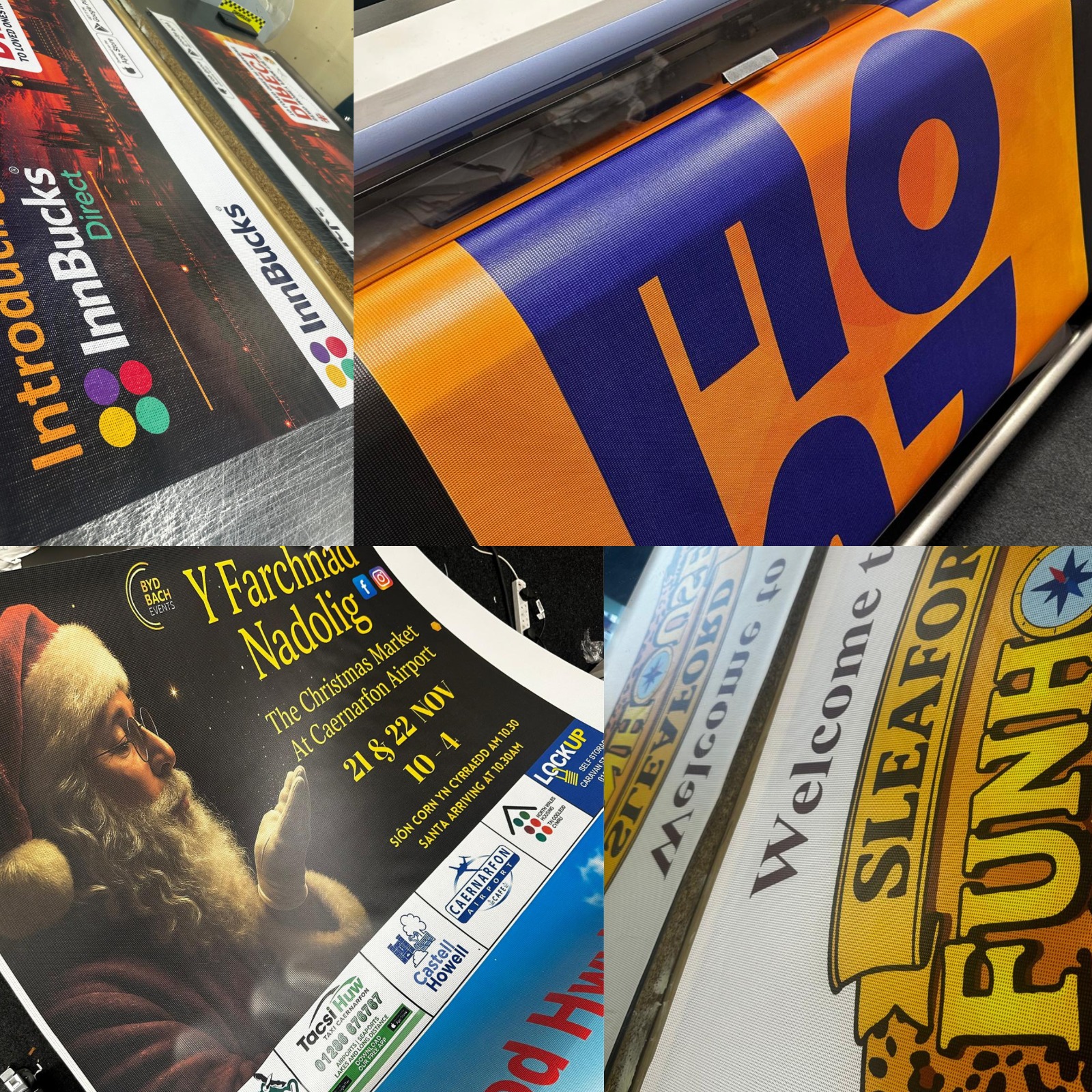
Mesh material contains small openings that allow airflow through the printed surface. Compared with a solid banner, this can help reduce wind loading.
That makes it a useful material to consider for suitable fences and exposed outdoor structures. However, mesh does not make an installation windproof. The support, attachments and site conditions still need attention.
Construction and Refurbishment Projects
A building project creates an opportunity to identify the contractor and introduce the business behind the work.
For example, a Manchester refurbishment company could use a fence banner to display its name, core service and website. The message should remain easy to recognise without competing with mandatory site information.
Promotional graphics should never obscure safety notices, entrances or visibility needed around the site.
Outdoor Events
An event banner might welcome visitors, identify a sponsor or promote an upcoming activity.
Choose one purpose for each display. A welcome banner needs different content from a sponsor graphic or an event advertisement.
Keeping those messages separate makes the information easier for visitors to follow.
Sports and Community Venues
Suitable perimeter fencing can provide space for club branding and sponsor recognition.
Consistency matters when several banners appear together. A shared approach to logo placement, backgrounds and typography can help the venue look organised while giving each sponsor a clear presence.
Mesh or Solid Vinyl: What Should You Consider?
Both materials can support outdoor advertising, but they suit different display requirements.
Consideration
Mesh banner
Solid vinyl banner
Surface
Perforated to allow airflow
Continuous printed surface
Typical applications
Suitable fencing, exposed displays and event perimeters
Promotional displays where a solid surface suits the installation
Artwork approach
Bold lettering and straightforward graphics work well
Continuous surface can suit artwork with more visual detail
Installation
Requires suitable support and secure attachments
Requires suitable support and secure attachments
The best choice depends on the actual location. Explain where and how you intend to display the banner when discussing the material with your printer.
Give the Banner One Main Job
A common design problem is trying to include every service, offer and contact method in one graphic.
Instead, decide what you want someone to remember after a brief glance.
For a local contractor, that could be the business name and trade. For a community event, it might be the event name and date. For a promotional campaign, the main offer should take priority.
A useful starting point is:
Main message → supporting detail → next step
This creates a clear order without requiring the audience to work through several competing ideas.
Example: A Contractor’s Fence Banner
A cluttered design might include a long company introduction, a full service list, multiple photographs and several contact methods.
A more focused approach could use:
The business logo.
A headline explaining the main service.
One relevant project photograph.
A clear website or telephone number.
The finished banner should help people identify the business and understand how to find out more.
Design for the Person Passing By
Outdoor advertising is often seen briefly. People may be moving, distracted or viewing the banner from an angle.
Your artwork should reflect those conditions.
Make the Headline Easy to Read
Use clear lettering and strong contrast between the text and background. Avoid placing important wording over a busy photograph.
Decorative fonts can work as a small brand detail, but the central message should be immediately understandable.
Keep Images Relevant
Choose an image that explains or strengthens the message. A photograph of completed work may help a contractor demonstrate its service, while an event graphic might work better with simple branding and a clear date.
Use original image files wherever possible. Images copied from messaging apps or social platforms may have lost detail through compression.
Choose a Practical Call to Action
The next step should match the display location.
A memorable website address can work where people cannot stop. A QR code may be useful where pedestrians can safely approach and scan it.
Avoid relying on a QR code as the only way to respond. Check that the audience has a realistic opportunity to use it.
Make the Message Relevant to Manchester
Local relevance comes from understanding the audience and the project.
A banner for a neighbourhood event should make the venue and event information clear. A contractor working on a Manchester project can show its business identity and explain the service being provided.
There is rarely a need to repeat the city name throughout the design. Useful local information is more valuable than adding a place name to every line.
The same principle applies to related online content: explain the service clearly, answer real customer questions and link to the appropriate product page where it helps.
Check the Finishing Before Approving the Order
The finishing should reflect how the banner will be attached.
Discuss the supporting structure and installation method with your printer. Eyelets, hemming and pole pockets serve different purposes, and the appropriate arrangement depends on the selected product and display.
Plan fixing positions alongside the artwork. Logos and contact details should remain clear of areas affected by attachment points or concealed edges.
For installations in exposed positions, obtain suitable advice about the structure and fixing method before putting the banner up.
Treat Artwork Approval as a Final Content Check
An artwork proof gives you an opportunity to review what will be printed. Take time to check the details rather than approving it based only on its overall appearance.
Look carefully at:
Business names and logo versions.
Telephone numbers and website addresses.
Dates, venue details and promotional wording.
Spelling and punctuation.
Image clarity and text contrast.
Placement of essential information.
If several people are involved, nominate one person to confirm the final version. This helps avoid contradictory feedback or an older file being approved accidentally.
Printing Zones UK provides an artwork proof for approval before printing.
Look After the Banner Once It Is Installed
A well-prepared graphic still needs attention during use.
Check the banner and its attachments regularly, particularly after adverse weather. Look for loose fixings, damage or changes to the supporting structure.
If the display becomes insecure, arrange for it to be made safe. Follow the relevant installation guidance and any rules set by the site or venue.
When the campaign finishes, remove the banner promptly. An outdated offer or event date can make an otherwise professional business display look neglected.
Plan Your Next Outdoor Display
A successful mesh banner starts with a suitable location, a focused message and artwork designed for the audience.
For Manchester businesses, the strongest approach is to connect those decisions: choose the material for the installation, shape the content around one purpose and check the finished design before production.
For help preparing your project, explore mesh banner printing in Manchester from Printing Zones UK. Our physical location is in Manchester, and we provide custom printing with UK-wide delivery.